
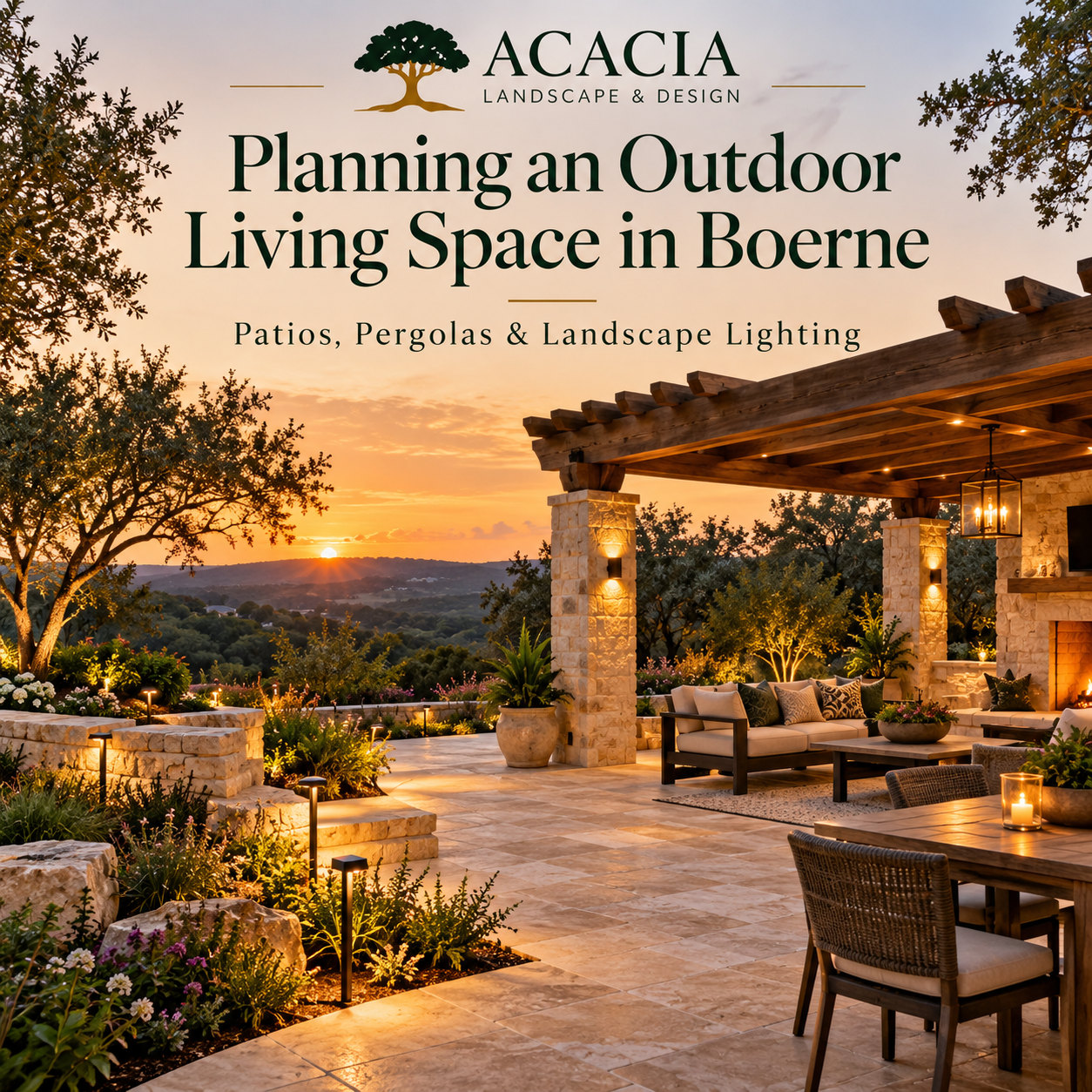
Planning outdoor living design in Boerne, TX starts with creating a comfortable, functional space that complements your home and the Texas Hill Country landscape.
The most inviting outdoor spaces feel like a natural extension of the home. There is room to gather, a comfortable path from the back door, a quiet place to sit, and enough light to enjoy the garden after sunset. Those details are easier to get right when the patio, shade, landscaping, and lighting are planned together.
In Boerne and the Texas Hill Country, the setting adds another layer to every decision. Afternoon sun, mature oak trees, sloping ground, limestone, views, and seasonal weather can all shape how an outdoor space should work. Whether you are starting with a bare yard or improving an established property, these planning steps can help turn separate ideas into one cohesive retreat.
In This Guide
- 1. Define How You Want to Spend Time Outdoors
- 2. Let the Patio Establish the Layout
- 3. Place Pergolas and Shade Where They Matter
- 4. Plan Landscape Lighting Before the Hardscape Is Finished
- 5. Connect Planting, Irrigation, and Drainage to the Hardscape
- 6. Build One Plan Before Installation Begins
- 7. Let the Boerne Setting Shape the Design
- A More Connected Outdoor Space Starts with a Better Plan
- Frequently Asked Questions
Quick Answer
Start with how you want to use the backyard, then map the patio around furniture and circulation. Study sun exposure before deciding where a pergola belongs, and plan low-voltage landscape lighting while paths, planting beds, and hardscapes are still being designed. Connect planting, drainage, and irrigation to the layout, and coordinate the work through one approved plan.
1. Define How You Want to Spend Time Outdoors
Before looking at patio materials or pergola styles, picture a typical afternoon or weekend in the space. Is the priority a shaded table for family meals, an intimate lounge for conversation, a place to watch children play, or a quiet corner for morning coffee? The answer should determine how much room each activity needs and how the spaces connect.
Walk from the doors that lead outside. Notice where you naturally turn, which views you would like to keep, and where nearby windows or neighboring properties affect privacy. A design that works beautifully in a photograph may feel awkward if guests have to navigate around a dining table to reach the garden.
At Acacia, the landscape design process begins with measurements and an assessment of existing features. That early planning helps the homeowner see how gathering areas, pathways, and planting can relate to the property before construction begins.
2. Let the Patio Establish the Layout
A patio often becomes the anchor for an outdoor living space. Its shape, orientation, and connection to the house influence where furniture goes and how people move into the yard. A generous patio is not automatically the better choice; proportions should fit the activities you want to accommodate.
Sketch the real furniture footprint, not just the outline of the paving. Leave space to pull out chairs, walk behind seated guests, open doors, and move between a grill or serving area and the table. If the property has changing elevations, consider how steps, transitions, or low walls will affect access and the overall experience.
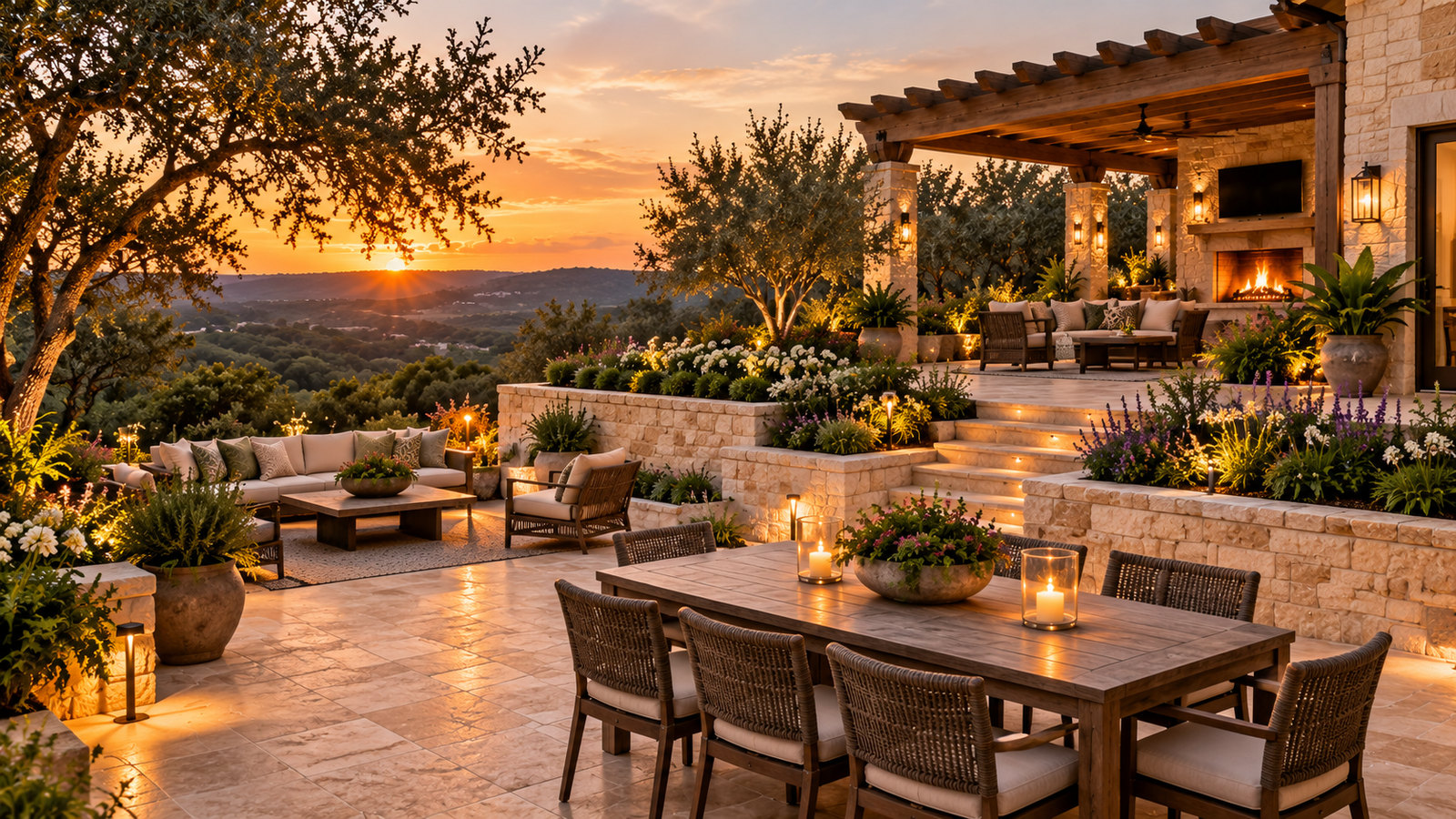
The patio helps define gathering areas, circulation and the relationship between architecture and landscaping.
Material selection matters as well. Natural stone, paving patterns, seat walls, and adjacent planting can make the outdoor room feel connected to the home rather than added on. Acacia lists patios, seat walls, retaining walls, fire pits, and outdoor kitchens among its landscaping services, allowing homeowners to consider the whole composition rather than only the patio surface.
3. Place Pergolas and Shade Where They Matter
Shade deserves attention early in a Boerne outdoor living plan. Observe where the sun falls in the morning, afternoon, and evening, especially where people will sit for longer periods. Existing trees may already provide valuable relief, while an exposed dining area could benefit from a deliberately positioned shade feature.
A pergola can define a gathering space and add architectural rhythm, but it is not the same as a solid roof. The amount of shade depends on the structure’s location, orientation, spacing, and any additional shading elements. Rather than assuming a pergola solves every heat or weather concern, design it around the time of day the space will actually be used.
Consider how the posts, overhead structure, neighboring planting, and patio materials look from the house. When these elements share a considered scale and palette, the finished space can feel like one outdoor room rather than a set of unrelated features.
4. Plan Landscape Lighting Before the Hardscape Is Finished
Think about the backyard after dark while the design is still flexible. Which steps and pathways need visibility? Would a mature tree, stone wall, or carefully planted bed benefit from subtle accent lighting? Which seating areas should feel intimate rather than brightly illuminated?
Acacia includes low-voltage landscape lighting design and installation in its landscaping services. Planning fixture positions alongside patios, walls, planting, and circulation can reduce the need to revisit finished areas when lighting is added later.
The best lighting plan is usually selective. Layers of low-level path lighting, discreet accent lights, and restrained illumination near gathering spaces can provide atmosphere without washing every feature in the same brightness. Consider where light will be visible from the house and neighboring properties, and choose appropriate installation details with the project team.
For additional guidance, DarkSky International’s Five Principles for Responsible Outdoor Lighting explain how targeted, appropriately bright, and warmer-colored lighting can support comfortable outdoor spaces.
5. Connect Planting, Irrigation, and Drainage to the Hardscape
Planting softens the edges of stone and gives outdoor rooms their sense of place. Layered shrubs, grasses, suitable perennials, and existing trees can frame a view or create privacy. In the Texas Hill Country, however, plant selection also needs to account for heat, drought, soil conditions, and deer activity. Acacia’s design team explicitly considers these factors in its landscape planning.
Hardscape placement also changes where water can travel. Look at runoff after heavy rain and avoid solving one problem by directing water toward a seating area or the house. The right response depends on the property’s slope, surface materials, and drainage conditions; it should be evaluated rather than guessed.
Coordinate the planting plan with irrigation systems before patios and garden borders are finalized. Acacia describes using drip irrigation in landscape beds and considering different options for lawn areas. Planning watering zones near seating and hardscape features helps keep the irrigation approach aligned with the outdoor space instead of treating it as a late addition.
6. Build One Plan Before Installation Begins
Outdoor projects can become complicated when each feature is chosen at a different time. A patio may end up too small for the furniture, a pergola may conflict with lighting locations, or planting beds may be left without a practical irrigation route. A coordinated plan makes these relationships visible before crews begin.
Start with a measured concept that identifies circulation, gathering zones, existing trees, grading, proposed materials, planting areas, and planned lighting. Then refine the choices: compare stone finishes, review shade patterns, and make sure the layout matches the way the household wants to use the property.
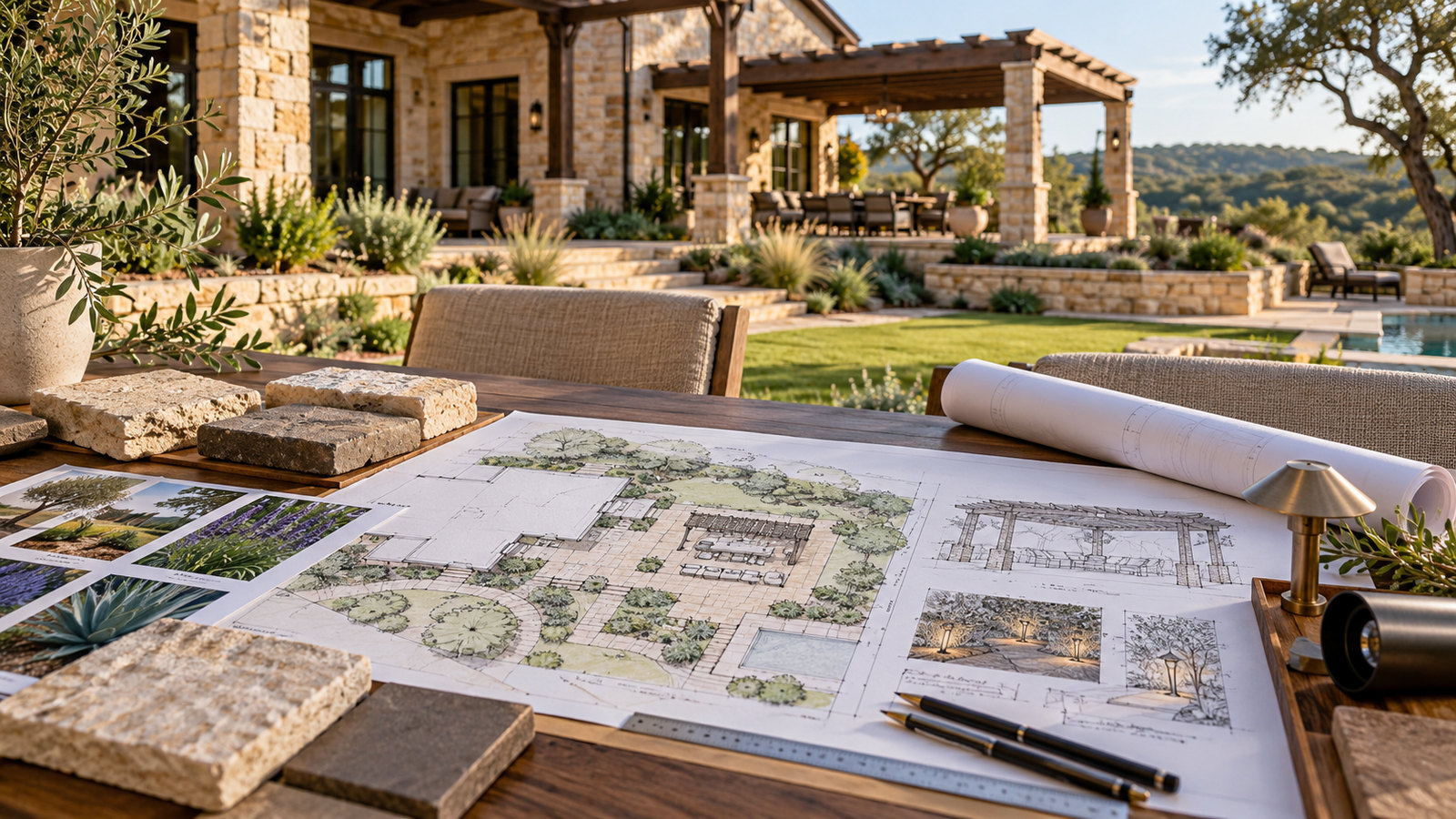
A complete design plan helps align patios, pergolas, lighting, planting and materials before installation begins.
Acacia’s landscape installation service can help bring an approved design into the property, with supporting features coordinated according to the agreed scope. Timelines, utility requirements, HOA rules, and any necessary approvals should be checked for the specific project rather than assumed.
7. Let the Boerne Setting Shape the Design
Thoughtful outdoor living design in Boerne brings together the home’s architecture, natural surroundings, and the practical needs of everyday outdoor living.
The strongest Hill Country outdoor spaces do not have to imitate a particular style. Some homes suit crisp stone geometry and restrained planting; others call for a more relaxed path through mature trees. What matters is how the choices respond to the architecture, the site, and the homeowner’s daily life.
When planning for Boerne, give special attention to afternoon exposure, where shade already exists, and how a patio sits against the natural ground. Keep views in mind without overlooking privacy, and consider how landscape lighting will feel from the interior as well as outside.
For a closer look at Acacia’s local service context, explore its Boerne landscaping page. This blog is intended to support that local page with planning guidance, not replace a dedicated service-area description.
A More Connected Outdoor Space Starts with a Better Plan
A well-designed outdoor retreat is not defined by how many features it includes. It feels right because the patio is comfortable, the shade falls where people need it, lighting reveals the landscape gently, and planting brings the whole space together.
If you are gathering ideas, explore Acacia’s Luxury Landscape Portfolio to see examples of stonework, landscaping, and outdoor features in completed settings. Then consider which details support your own home, property, and priorities, not simply which details look impressive on their own.
When you are ready to discuss your property, schedule a free initial consultation with Acacia Landscape & Design to talk through your outdoor living goals and possible next steps.
READY TO PLAN YOUR OUTDOOR LIVING SPACE?
Discuss your Boerne property, ideas, and priorities with Acacia Landscape & Design.
Frequently Asked Questions
Should I plan a patio and pergola at the same time?
Usually, yes. Planning them together lets you consider the relationship between seating space, sun exposure, circulation, proportions, and materials. A pergola should be placed for the way the area will actually be used.
When should landscape lighting be included in an outdoor living project?
Ideally during the design stage. This allows path, accent, and gathering-area lighting to be considered before the patio, walls, and planting beds are finished.
Can Acacia help improve an existing backyard instead of starting over?
Acacia describes working on both new landscapes and improvements to existing properties. The appropriate scope depends on the site, the features that can remain, and the homeowner’s goals.
What should I consider before adding a pergola in Boerne?
Look at where sunlight falls when you expect to use the space, how the structure relates to the patio and house, and what type of shade it can realistically provide. Confirm any property-specific restrictions and installation requirements before construction.
How do planting and irrigation fit around a new patio?
They should be planned together. Planting can soften edges and add shade or privacy, while irrigation layout and drainage should account for patio surfaces, seating areas, and paths.